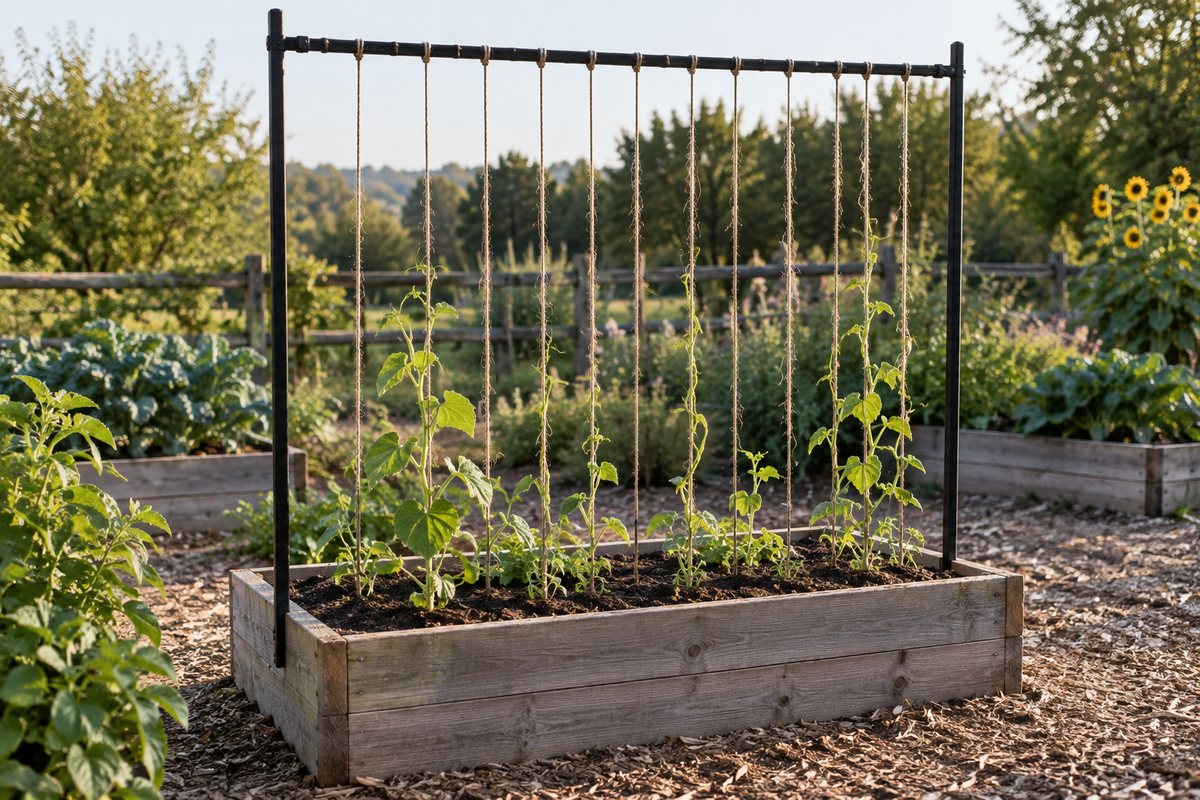
The Vego Metal Frame String Trellis VTT50 is different from a freestanding obelisk: it connects to a compatible Vego raised bed and uses string to create the climbing surface. That can be useful for a gardener who already has the right bed and wants a planned vertical route. It is a poor shortcut for someone shopping for a universal frame to put in any container or open soil. We recommend checking bed compatibility before comparing its height or the plant you might grow on it.
This profile covers the 5.0-foot bed-length option, VTT50, using Vego's listing and VTT50 assembly manual reviewed September 27, 2026. The current Amazon listing identifies the matching VTT50 model.
Match the exact bed before judging the trellis
Vego offers multiple bed styles and trellis variants. The VTT50 manual shows different connector holes for Classic and Novel beds with 17- or 32-inch widths, and its installation calls for two people. That makes the exact bed style and assembled dimensions the first decision. A frame that looks the right length in a photograph may still have the wrong connector relationship for your bed.
Find the bed's model or configuration and measure the actual assembled length and width. Then compare it with the current VTT50 manual, not just a marketing family page. Confirm the hardware and the point of attachment. If the bed model is unknown, identify it before ordering. An unverified “five-foot bed” description is not enough when connector holes and variants differ.
Imagine a gardener with an existing compatible Vego bed in a sunny, accessible position. A bed-connected string system could keep the vine and support in one planned area, with the frame attached according to the manual. Now imagine a gardener with a different brand's wooden raised bed. The frame may be visually appealing, but this manual does not establish a fit. A freestanding support with its own documented installation would be a clearer category to investigate.
If you have not yet bought the bed, price and plan the whole system rather than treating the trellis as a standalone item. This page does not state current prices. The cost question is simply that a bed-specific frame can create a dependency: replacing or changing the bed may change the support plan too.
Read the height as a growing area, not a promise
Vego lists a 73-inch frame and a 55½-inch trellised area for this variant. The distinction matters. The overall frame height is not the same as the length of string surface available to a vine. Put the trellised area on your drawing and consider where the plant starts, where it reaches the string, and what happens above the string section.
For Ipomoea tricolor morning glory, Illinois Extension describes vigorous growth and a potential scale larger than this trellised area under suitable conditions. That does not prove the VTT50 is unsuitable; it means the gardener must plan the vine's edges and seasonal management. A frame cannot by itself keep a fast-growing vine inside a rectangle.
Other plants may climb string differently. Do not generalize from one plant's behavior to every vegetable or flower in a product photograph. Confirm the plant's attachment method and the strength and installation information relevant to the exact crop and site. Vego’s published details do not establish a load rating for VTT50.
| Question | Published clue | Your next action |
|---|---|---|
| Will it attach? | Manual distinguishes Classic and Novel 17/32 in bed connector holes | Identify the exact Vego bed and match the diagram |
| How much climbing area? | 73 in frame; 55½ in trellised area | Draw the route from soil through the string section |
| What forms the lattice? | Maker lists included ⅛ in jute twine | Check current stringing instructions and seasonal replacement needs |
| How is it installed? | Manual specifies a two-person process | Plan assembly space, helpers and access to both bed sides |
Plan the string pattern and routine care
The maker lists jute twine as part of the system. A string surface can create many small climbing routes and may be easier to reconfigure than a welded metal grid, but the actual pattern and tension come from the current instructions and the way it is assembled. Do not assume the string will last indefinitely or support every plant load. Inspect it during the growing season and follow the maker's directions for maintenance or replacement.
Place the bed where you can work on both sides of the frame. A string trellis can become hard to untangle or prune if one side is pressed against a fence. If the bed is already installed, check whether there is enough working room for the two-person assembly described in the manual. A neat product photograph may omit the space and hands needed to build and tend it.
For a seasonal vine such as morning glory, decide how the string will be cleared after growth. The prospect of removing old plant material is part of the product's fit. A gardener who changes crops yearly may value an easily serviced string pattern; another who wants a rigid, permanent grid may prefer a different form. Those are workflow judgments, not measured durability claims about the VTT50.
Route growth away from bed paths and adjacent plants. A string frame defines an intended plane, but a vigorous vine can extend beyond it. The morning-glory guide explains how to choose a location and plan seasonal cleanup. If your exact plant is another species, use guidance for that plant rather than assuming the same growth pattern.
Know when a different support is simpler
A gardener with an ordinary in-ground bed does not need a bed-connected frame. A freestanding panel, properly installed for the site, can offer a climbing route without depending on Vego connectors. A sound fence may already provide a useful surface. A container gardener needs a support designed and assessed as part of the pot arrangement rather than an improvised bed connection.
Even an owner of a compatible bed may prefer another form when the bed location leaves no access to one side or when the intended plant requires more width or a different training shape. The right frame is the one that fits the gardening routine and installation, not merely the one whose dimensions match the bed on paper.
Do not use the presence of metal framing as a strength guarantee. The published specifications do not establish plant-load, wind or long-term string performance. The maker manual is the place to begin for assembly; site-specific concerns still require assessment. The linked Amazon listing identifies VTT50, but confirm its selected option and current terms before ordering.
Make the whole-bed decision
- Record the exact Vego bed family, size and assembled configuration.
- Match those details to the current VTT50 connector diagrams and included parts.
- Compare the 55½-inch trellised area, rather than only the 73-inch frame, with the intended plant route.
- Plan two-person assembly and access to both sides of the bed.
- Check the current stringing instructions and how you will inspect and clear the twine.
- Choose a freestanding or existing support if bed compatibility or working access is uncertain.
We recommend investigating VTT50 for an owner of a confirmed compatible Vego bed who wants an integrated, serviceable string route and can follow its assembly instructions. Its clearest advantage is a documented bed-specific design. Its defining limitation is the same dependency: without an exact bed match, it is the wrong product category. Resolve compatibility first, then assess the plant and seasonal workload.